Investigating the Merits of Sideways Directional Drilling


Within this ever-evolving landscape of construction and service installation, Horizontal Directional Drilling (HDD) has emerged as a transformative technique. As the demand for infrastructure keeps to grow, traditional methods like excavation often struggle to meet the requirements for effectiveness, environmental sustainability, and limited disruption. HDD is recognized as a answer that merges advanced drilling technology with a focus to preserving existing landscapes and ecosystems, making it an ever more popular choice for a range of endeavors.
Grasping what Horizontal Directional Drilling is and how it operates is essential for those considering service setups or infrastructure upgrades. This cutting-edge drilling method enables contractors to install pipes, cables, and other utilities beneath the surface without the need for extensive excavation. From urban environments to sensitive areas, HDD provides a pathway that minimizes surface disruption, enhances project timelines, and significantly reduces environmental footprint. In the following sections, we will delve deeper into the numerous advantages of HDD, examining its applications in contemporary projects and the future of trenchless technology.
Main Benefits of HDD in Utility Setup
Horizontal Directional Drilling offers numerous notable benefits in utilities setup, especially when lessening the disturbance to pre-existing infrastructure. One significant benefit is the capability to place utilities below ground without the need for the requirement for extensive trenching. This technique lessens surface disruption and the associated costs of restoring streets, pavements, and landscaping. As a result, placing utilities in city areas is more seamless for residents and establishments, allowing for a more efficient setup procedure.
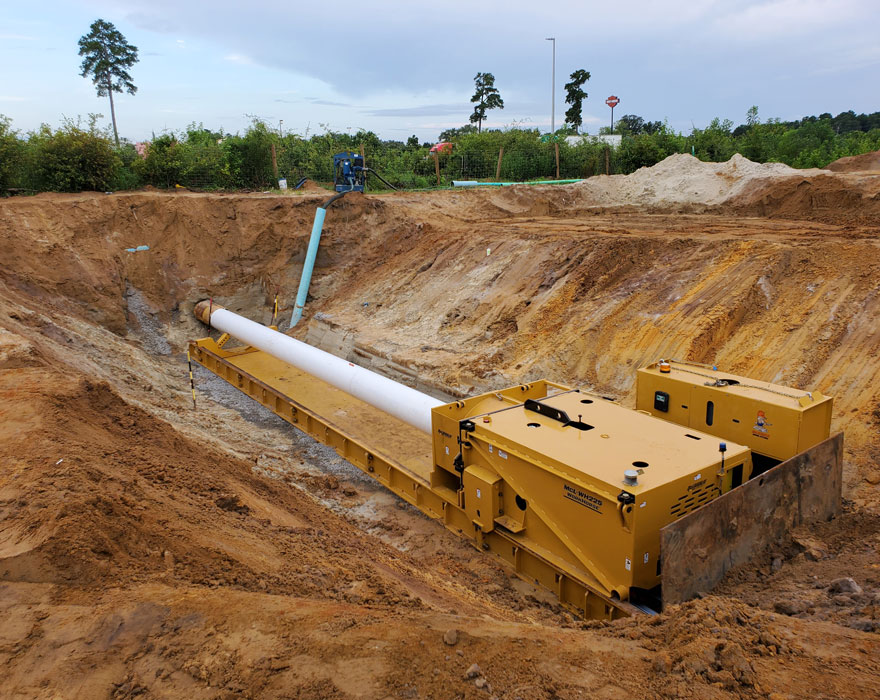
Another benefit of Horizontal Directional Drilling lies in its productivity and quickness. Traditional excavation methods typically necessitate longer project timelines due to the need for significant excavation and backfilling. Horizontal Directional Drilling can quickly bore through different soil types and landscapes, which helps to accelerate project finalization times. This not only saves time but also lowers workforce and machinery costs, making it a budget-friendly option for utility setup, notably in crowded areas.
In conclusion, HDD is extraordinarily adaptable and can be used for a range of utilities setups, like hydration, drainage, natural gas, power, and communication lines systems. Its adaptability makes it an ideal choice for initiatives that necessitate passing over barriers such as streets and bodies of water, as well as in sensitive environmental regions where conventional methods would pose major issues. With its little impact on the environment, HDD not just provides a trustworthy utility installation approach but also promotes sustainable approaches in construction progress.
Comprehending the HDD Process
HDD is a trenchless technology that involves a methodical process for installing subsurface utilities with little topside disruption. The process begins with the planning phase, where engineers evaluate the site site, soil conditions, and architectural requirements. This evaluation is crucial for identifying the appropriate bore path and choosing the necessary equipment. Careful planning also includes obtaining permits and ensuring adherence with regional regulations to facilitate a seamless operation.
Once planning is complete, the initial tangible step is the pilot hole drilling. A directional drill rig is used to bore a small hole along the designated path. This is achieved by using a drill bit fitted with sensors that enable the operator to monitor the drill's trajectory in actual time. The pilot hole serves as a reference for later operations and is typically followed by the reaming process, where the diameter of the hole is progressively expanded to fit the utility lines.
After achieving the appropriate hole size, the installation of the utility line takes place. The utility line, either a pipe or cable, is pulled back through the new borehole. The use of drilling mud is essential during this stage as it lubricates the drill bit, stabilizes the hole, and helps remove cuttings from the bore. Finally, the HDD process concludes with a comprehensive examination of the installed utility, ensuring it meets all specification requirements and performance standards before the project is deemed finished.
The Future of HDD and Trenchless Technology
As the demand for efficient infrastructure solutions continues to rise, HDD is poised to play a vital role in the advancement of trenchless technology. With progress in drilling equipment and methods, HDD is becoming increasingly adaptable to various environmental and logistical challenges. This evolution is driven by the growing need for urban development, renewable energy, and telecommunications infrastructure, which require minimally invasive construction practices. Future advancements in HDD are forecasted to enhance accuracy and reduce project timelines even further, making it an essential tool for contemporary infrastructure projects.
The adoption of cutting-edge technology, such as GPS and real-time data analytics, is transforming how HDD projects are planned and carried out. These technologies allow for improved mapping and monitoring of subsurface utilities and geological conditions, minimizing risks and improving safety. Furthermore, as the focus on sustainability grows, HDD’s minimal disturbance methodology aligns with environmental goals, reducing surface disruption and protecting natural landscapes. The future of HDD will hinge on these technological advancements, positioning it as a leading method for installation across various industries.
Additionally, as regulations become more strict concerning environmental protection and urban development, HDD offers a viable solution for navigating these challenges. The ability to complete projects underground without significant excavation positions HDD as a leader in trenchless technology. Directional Drilling Dundalk Ireland will grow to tackle difficult environments, including river and road crossings, as well as in delicate ecological areas. As stakeholders increasingly recognize the advantages of HDD, its role in defining the future of infrastructure will become even more significant, ensuring that it remains a key player in the construction industry for years to come.